
Empowered Teams, Resilient Organisations: Using Objective-Centric Risk Management
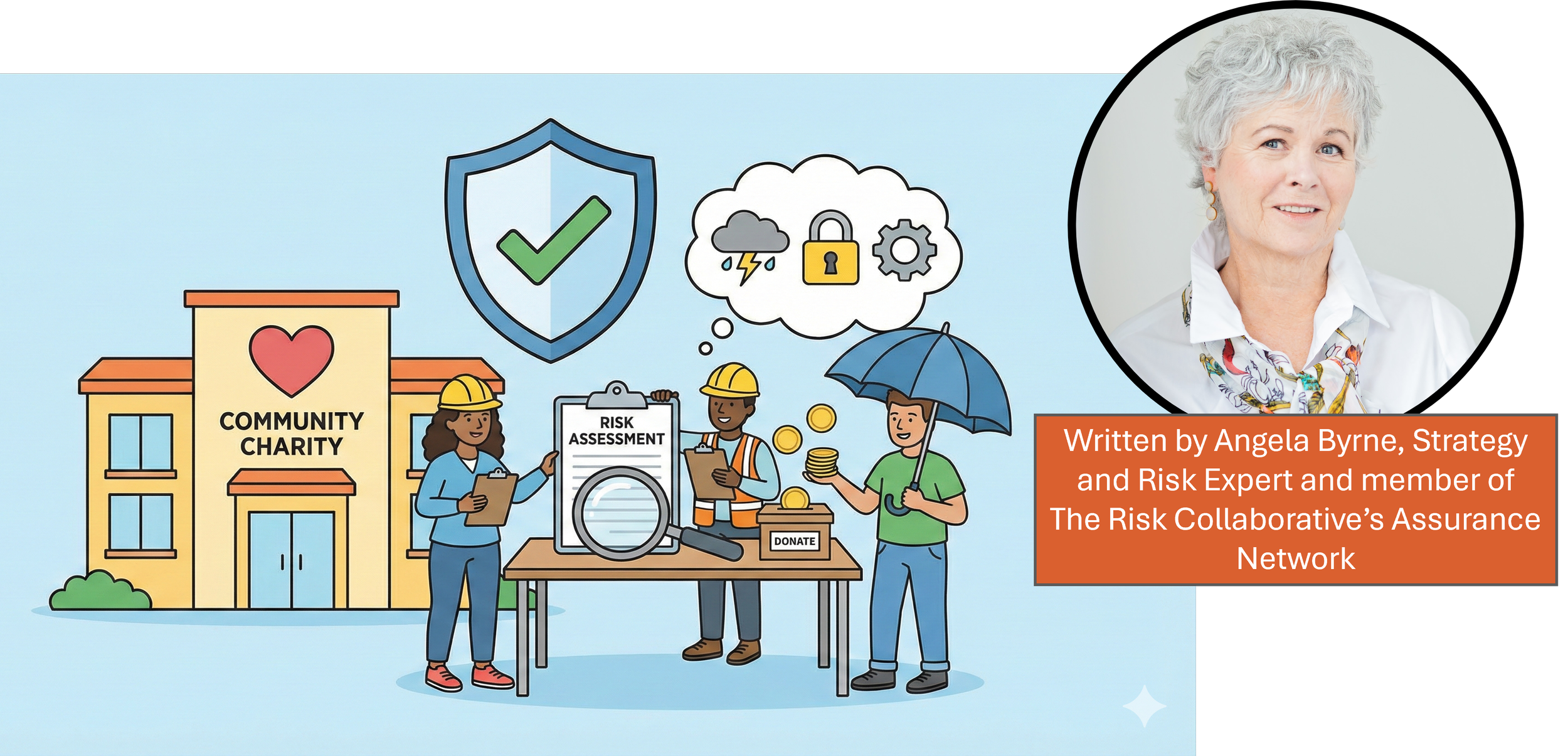
Charities today operate in an increasingly complex environment. Demand for services is rising. Funding models are shifting. Reporting expectations are expanding. At the same time, many organisations are experiencing staff fatigue, turnover, and disengagement.
While employee engagement is often treated as a human resources issue, it is equally a risk management issue.
When staff feel unheard or disconnected from decision-making, organisations lose more than morale. They lose insight. They lose early identification of problems. They lose innovation. Disengaged employees are less likely to raise concerns, challenge assumptions, or identify risks that could prevent the organisation from achieving its mission.
Conversely, when employees feel empowered and trusted, they become the organisation’s most effective risk managers.
Shifting the Risk Conversation
Traditional risk management in charities can feel compliance-driven, focusing on checklists, policies, and reports to satisfy oversight requirements. While governance and accountability are critical, risk management must ultimately inform decisions and action.
An objective-centric approach to risk changes the conversation. Rather than asking, “What are our top risks?” leaders and teams ask:
“What might get in the way of achieving our objectives?”
This shifts the discussion. Risks are no longer abstract categories; they are barriers to meaningful outcomes, whether those outcomes are improving client services, strengthening financial sustainability, or enhancing workforce engagement.
When staff are invited into structured conversations about objectives and what could derail them, risk management becomes relevant, practical, and empowering.
Five Practical Steps
An objective-centric risk framework can be implemented through five disciplined but adaptable steps:
1. Clarify Mission-Critical Objectives
Identify and document the objectives that matter most to organisational success.
2. Assign Clear Accountability
Determine who is accountable for each objective and the level of effort required to assess related risks.
3. Confirm Alignment with Leadership and the Board
Ensure leadership and the Board understand and validate the objectives and accountability structure.
4. Facilitate Risk and Response Discussions
Bring together individuals from different roles and perspectives to discuss what could get in the way and what actions will meaningfully move towards success.
5. Report Clearly and Transparently
Provide concise reporting to leadership and the Board on objectives, key risks, and management responses.
The structure is important, but the implementation approach is what transforms workplace dynamics.
Empowerment Through Participation
When staff are invited into well-facilitated discussions about objectives and risks, several powerful shifts occur:
• Clarity increases. Employees understand how their work connects to strategic goals.
• Ownership strengthens. Accountability for sub-objectives gives staff a clear line of sight between daily tasks and mission success.
• Blind spots surface. Diverse perspectives reveal risks and assumptions that leadership alone may not see.
• Innovation improves. Solutions become more practical and grounded in frontline realities.
For charities, this is particularly important. Staff often bring deep commitment to the mission. When they can see how their insights directly influence decisions, engagement rises.
Funders also benefit from this approach. An organisation that links risk management directly to objectives is better positioned to demonstrate thoughtful governance, disciplined oversight, and measurable impact.
Sustaining Engagement Through Continuous Improvement
Risk management should not be a once-a-year exercise. It should be a continuous learning process embedded in how the organisation operates.
Three simple disciplines help sustain progress:
1. Measure Outcomes, Not Just Activity
If the objective is workforce sustainability, turnover rates and retention metrics are more meaningful than tracking the number of engagement initiatives.
2. Review Actions Honestly
If expected results are not materialising, revisit assumptions. Consider if current actions are truly addressing the identified risks.
3. Celebrate Progress
Recognition reinforces momentum. When teams see that their contributions move the needle, engagement strengthens.
Equally important is reframing lack of progress or missteps as learning opportunities. In complex environments, not every initiative will succeed.
When organisations normalise review and adaptation, they foster psychological safety and resilience.
Building Resilience from Within
Charities are mission-driven by nature. Yet mission alone does not guarantee resilience. Resilience is built when:
· Objectives are clear.
· Accountability is defined.
· Diverse perspectives are invited.
· Decisions are informed by reliable information.
· Feedback is transparent and constructive.
An objective-centric approach to risk management moves organisations beyond policy binders and into empowered practice. It equips frontline staff to manage daily risks with confidence. It strengthens alignment between strategy and operations. And it increases the likelihood that mission-critical objectives will be achieved.
For charities and their funders alike, the message is clear: effective risk management is not about avoiding failure, it is about enabling success.
When risk management empowers people rather than constrains them, organisations become more adaptive, more accountable, and more resilient.
Empowered teams truly do build resilient organisations.
Angela Byrne, CPA, draws on more than three decades of governance and risk leadership to strengthen charities and mission-driven organisations. She works with Boards and executive teams to align objectives, resources, and oversight in ways that protect and advance the missions they care deeply about. Her focus is building resilient organisations from the inside out—where empowered teams and disciplined governance come together to achieve meaningful, lasting impact.
