
Embracing Uncertainty - Storytelling & Risk at the CFG 2026 Risk Conference
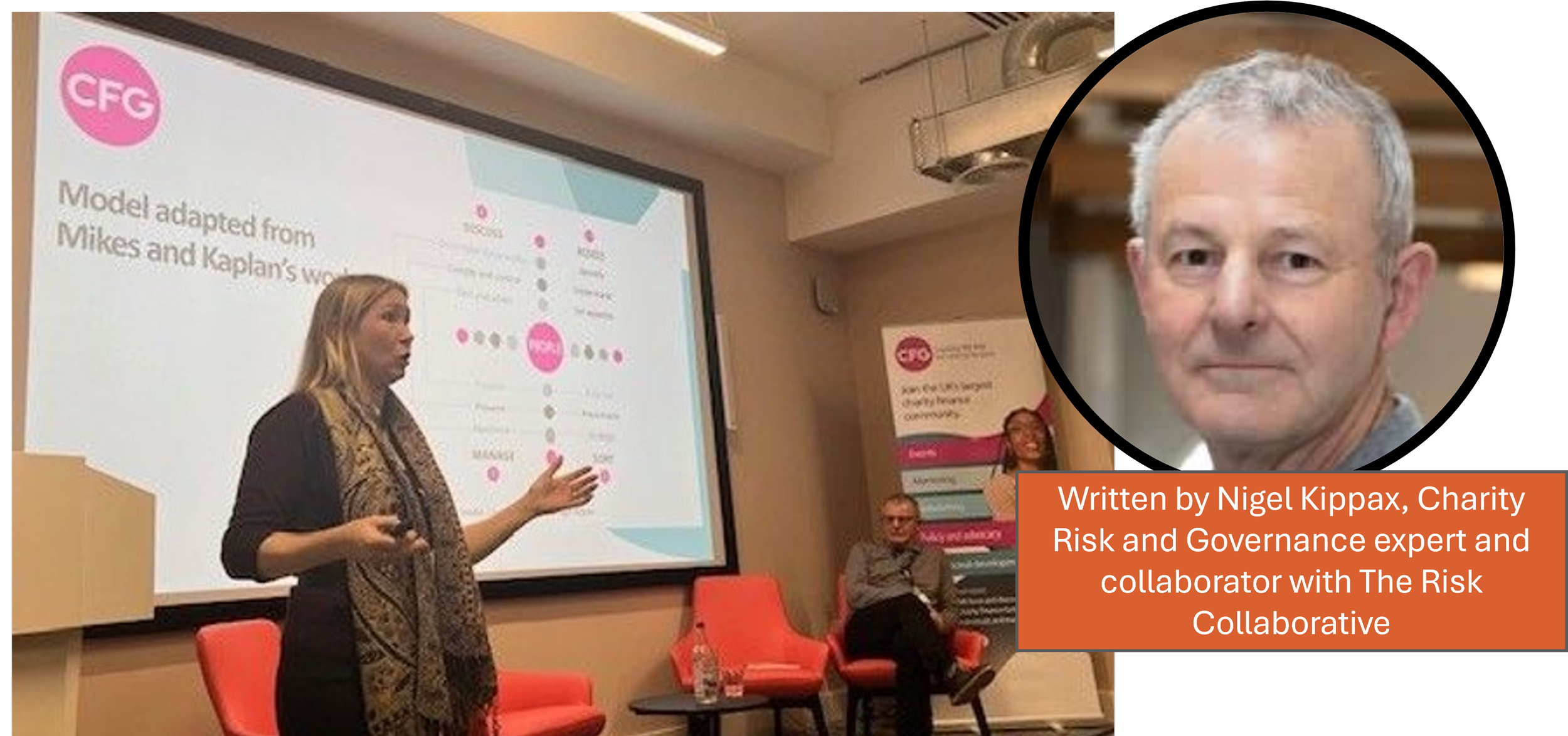
Nigel Kippax and Caron Bradshaw speak at the 2026 Charity Finance Group Risk Conference, 11 February 2026.
In a world defined by constant change and uncertainty, charities continue to stand at the forefront of supporting communities. The Charity Finance Group Risk Conference 2026 brought together leading voices and sector experts to tackle the most pressing issues facing charities today.
The afternoon session, led by Caron Bradshaw and Nigel Kippax of CFG, sought to challenge traditional thinking on risk. Below is Nigel’s thoughts on the session.
Embracing uncertainty – Storytelling & risk
How many of us recognise the following scenario: The management or board meeting moves on to the topic of risk, attention shifts to the risk register and discussion focuses on all the things that could go wrong.
Much of the guidance and advice that leaders in the charity sector receive on risk focuses on avoiding bad things from happening. Whilst protecting, controlling, and assuring are essential, we argue that it is not sufficient. A more balanced approach is needed. Without a desire and acceptance to take risks, nothing will change, nothing will grow.
Facts tell, but stories sell.
We used storytelling from the worlds of sport, history, corporate America and religion to address the question:
‘How can our risk mindset shift to a more balanced approach, one that embraces uncertainty?’
Sport: The extreme sport of kayaking is not for everyone. Those who thrive in this environment certainly embrace risk. However, even those participating in one of the most risky sports on the planet know when to stop, reflect, assess and re-plan. Sometimes the waterfall really is too big! Risk is not an on/off switch. It’s a decision that requires judgment.
History: History offers many lessons on decision-making. We reflected on the story of Bletchley Park and what followed after the Enigma code was broken. We considered the different types of decisions taken and how understanding them can help us in our approach to charity risk. We identified what we described as ‘management’ decisions and ‘leadership’ decisions. Quite different in their nature, each essential but neither sufficient on its own.
Corporate America: Our attention then moved to corporate America and the research work of Robert Kaplan and Anette Mikes at Harvard Business School. In their HBR article on risk, they challenged decision makers to consider risk in three categories. Charity leaders can learn from this. The categories of external, preventable and strategic risks require different approaches and mindsets. There is no one-size-fits-all when it comes to managing risk.
Religion: Finally, we turned our attention to the parable of the talents. (Matthew 25). As charity trustees or employees, we are given responsibility for something of value - charity assets - that can be used to further the charity's aims. We have a choice. We can protect these assets so that we hand them back ‘safe and sound’ once our tenure is over. In the parable, the servant who acted in this way was severely criticised. Alternatively, we can use the assets to build and grow the charity's impact, thereby delivering social good and creating our own personal legacy. We have a choice.
There is much to learn from stories, even from such diverse arenas as extreme sport and theology. Adopting a balanced approach to risk will be good for staff, trustees, and society.
The session closed with an update on the current review of the Charity Commission’s risk guidance CC26 and information on the new and exciting Risk Leadership Programme from CFG and The Risk Collaborative, due to launch mid 2026. For more information on the Risk Leadership Programme, please reach out to contact@theriskcollaborative.org.
