
Risk Management and Mental Health
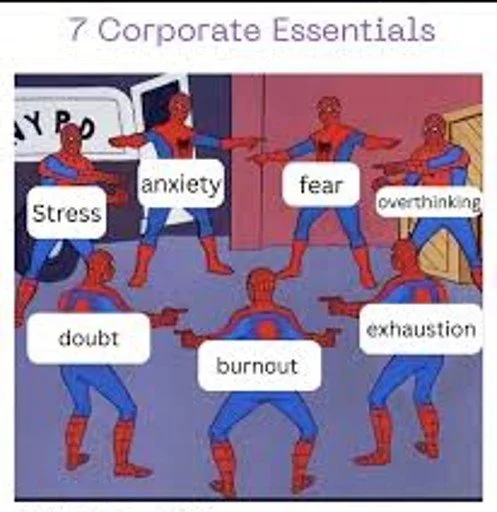
April was World Health Month and Autism Awareness Month. We talk a lot in the third sector about financial, reputational, and programme risks. What we talk about far less is the risk environment that every single one of your staff walks into every single day, the workplace itself.
A culture of fear is a risk. A "don't bring me problems, bring me solutions" norm is a risk. A meeting room where the loudest voice always wins is a risk. Not because these things make people feel bad (they do), but because they systematically destroy your organisation's ability to see what is actually happening.
When people feel safe raising concerns early, problems surface before they become crises. When candour is rewarded, leaders receive accurate information rather than edited information. When silence becomes the rational choice for staff, weak signals go undetected (right up until the moment they are impossible to ignore).
A healthy risk management environment and a healthy working environment are not two separate projects. They are the same project.
What neurodivergent colleagues bring to the table
Our neurodivergent colleagues, those with autism, ADHD, dyslexia, dyspraxia, and beyond, often process information differently from their neurotypical peers. In many workplace conversations, this difference has been framed as a challenge to accommodate, but I see these diverse ways of thinking as an asset to risk management.
Many neurodivergent employees have a heightened ability to notice patterns, inconsistencies, and anomalies that others may simply filter out. They often bring exceptional attention to detail, a strong drive toward logical consistency, and a lower tolerance for things that "don't add up."
Sound familiar? It should. Because what I have just described is, in risk management terms, precisely the capacity organisations most need.
Weak signal detection, the ability to notice early indicators of an emerging problem before it fully crystallises, is one of the most valuable and underinvested capabilities in any organisation. It is not a process. It is a human skill. And many of your neurodivergent colleagues may have it in abundance.
But, it’s the operating environment that determines whether the skill can function
A neurodivergent employee who notices something wrong (e.g., a financial pattern that doesn't quite make sense, a programme assumption that seems to be fraying, a safeguarding concern in its earliest stage) can only contribute that observation if your culture makes it safe to do so.
In many organisations, it isn't safe. On paper it looks perfectly safe to speak up. There may be a speak-up policy, a whistleblowing procedure, or an open-door statement from the CEO. But informally, culturally, the unspoken message is: don't overcomplicate things, don't be difficult, don't be the person who raises something everyone else has decided not to worry about.
For neurodivergent staff, this dynamic can be particularly acute. The social cost of raising a concern in an environment that punishes candour is high for anyone. For someone already working harder to navigate implicit social norms, that calculation can become impossibly costly. So they stay quiet…and the signal is lost.
This is not only a diversity and inclusion failure, but it’s also a risk management failure. A direct failure of your organisation's ability to learn, to see, and to adapt.
What a good risk culture actually looks like
A good risk culture does not demand conformity of thought. It actively benefits from the differences. Diverse cognitive perspectives are not a nice-to-have for your risk function; they are one of its most reliable sources of insight.
The question to ask of your organisation is not "do we have a speak-up policy?" The question is: who last raised a concern that changed a decision? How did that go for them? And who never raises concerns but probably should?
A closing thought
World Health Month reminds us that health is not just the absence of illness. It is the presence of conditions that allows people to thrive. The same is true of organisations. A healthy risk management environment is one where every member of your team can contribute their sharpest thinking to help keep your organisation on course.
